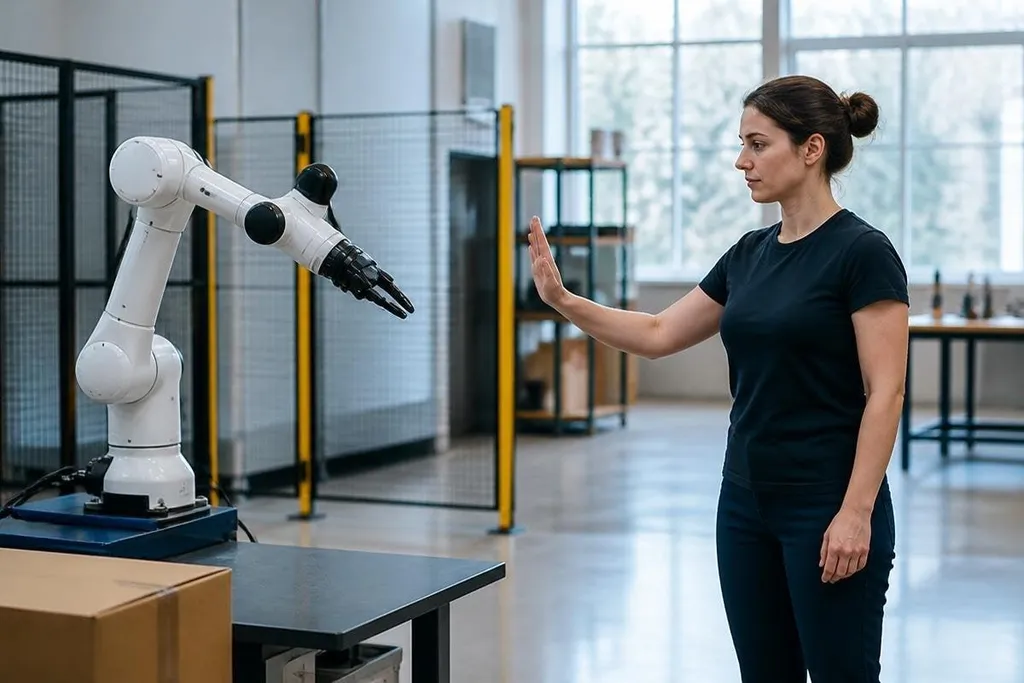
A robot can choose an action, but that does not mean it understands the moral weight of that choice. The useful question is narrower: which parts of an ethical decision can a machine handle, and where must a person remain responsible?
- Robots can apply set rules to known situations
- Sensors give machines incomplete information
- People must set values, limits, and review steps
What a robot can decide
A robot can compare possible actions against rules written by people. An autonomous vehicle may slow when its sensors detect an obstacle. A warehouse robot may stop when a person enters a marked safety area. A care robot may refuse to move if its force sensors detect resistance.
Those actions can look ethical because they protect people or respect a limit. The robot is still checking conditions and selecting a programmed response. It does not decide why a person’s safety matters, or whether a rule should change when the situation falls outside its design.
That distinction matters because ethical decisions often depend on context. A robot may detect two people in danger, but its software still needs a rule for choosing where to move first. The rule might favor the nearer person, the person at greater risk, or the action that gives a human more time to intervene.
The machine sees signals, not the whole situation
Sensors turn the physical world into data. Cameras record shapes and movement. LiDAR measures distance. Force sensors detect contact. Software then uses those signals to estimate what is happening.
Each step can fail. Poor light may affect a camera. A blocked sensor may hide an object. A system may classify a person, animal, or tool incorrectly. The machine can respond to its estimate, but an estimate is not the same as full knowledge.
This creates a direct limit on ethical behavior. A robot cannot make a sound choice if it cannot detect the people, risks, or permissions that matter. More sensors may improve the estimate, yet no sensor package removes uncertainty from every setting.
Dated robotics reporting from Robot24.com can show how an autonomous system handled a real site, including the point where a person had to review its choice. That record gives ethical rules a real system and a clear human checkpoint.
Rules need a person behind them
A robot’s ethical behavior starts before the robot moves. People decide which outcomes matter, which risks are acceptable, and when the machine must stop and ask for help.
That work includes writing operating rules, setting force and speed limits, choosing what data the robot may collect, and deciding how long that data stays available. It also includes testing cases where two rules point in different directions.
A rule can be clear and still be wrong for a particular setting. A hospital robot may need to protect privacy while delivering supplies. A security robot may need to record an event while limiting the collection of information about people nearby. The machine can follow the selected policy, but people remain responsible for choosing it.
I'd keep ethical authority with a named person or team, even when the robot handles routine choices. That responsibility should not disappear behind a software setting.
Why human review still matters
Human review gives the system a way to handle cases its rules do not cover. A supervisor may stop a robot, change its operating area, or approve an action after checking the wider situation.
The review process needs clear triggers. A robot should ask for help when sensor readings conflict, when confidence falls below a set limit, or when an action could injure someone. The exact limits depend on the robot’s job and surroundings, so the operator needs records that show what the system sensed and why it acted.
A useful record can include the sensor input, the rule selected, the action taken, and any human override. Without that trail, a company may know that a robot made a bad choice but lack the details needed to fix the system or judge responsibility.
A practical test for ethical robot decisions
Before giving a robot authority over a task, check these points:
- Name the decision: Write down the exact choice the robot may make and the choices reserved for people.
- Set the limit: Define the speed, force, area, and conditions that require the robot to stop.
- Test uncertainty: Check how the system responds to blocked views, missing data, unusual objects, and conflicting sensor readings.
- Assign responsibility: Name the person who approves the rules, reviews failures, and can suspend operation.
- Keep a record: Store enough information to connect the robot’s action with its input and selected rule.
- Review the policy: Change the rules when incidents, new risks, or new uses show that the original limits were too weak.
A robot can make a rule-based choice in an ethical situation. It cannot set the value behind the rule, understand every human consequence, or accept responsibility for the result. The practical test is whether a person can explain the rule, inspect the evidence, and stop the machine when the situation exceeds its limits.